
Trae - Claude code alternative
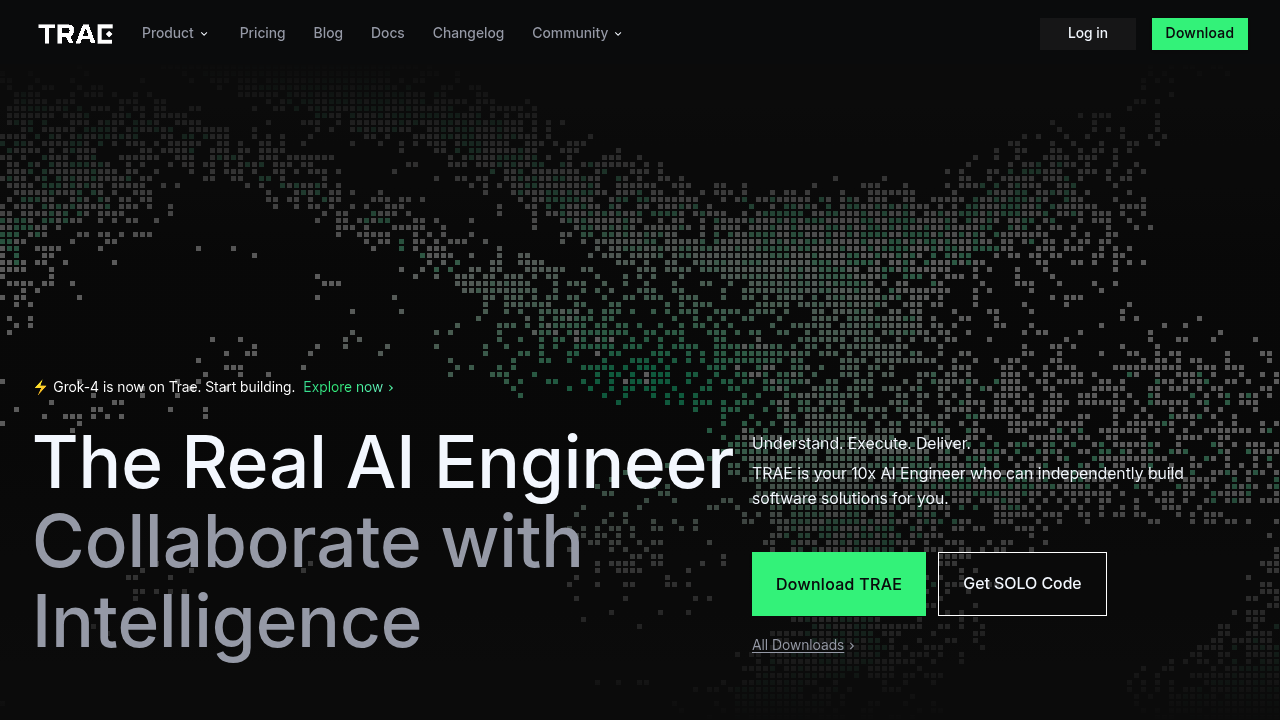
Trae is a full-featured IDE developed by ByteDance that integrates AI-powered code generation, real-time suggestions, and automated project building. The platform combines Builder Mode for scaffolding entire applications from natural language descriptions with Chat Mode for conversational coding assistance. Solo developers often prefer Trae because it provides unlimited access to advanced AI models completely free, including GPT-4o and Claude 3.5 Sonnet, without subscription costs or usage restrictions.
Strengths
- Completely free access to premium AI models (GPT-4o, Claude 3.5 Sonnet) with unlimited usage.
- Builder Mode automatically breaks down complex tasks, generates code structure, and applies multi-file changes.
- Multimodal input support allows uploading images, screenshots, and design mockups for UI code generation.
- Full IDE functionality including project management, extensions, version control, and GitHub integration.
- VS Code-based architecture enables seamless migration of settings, extensions, and workflows.
- Real-time code completion with context awareness across entire workspace and terminal interactions.
Weaknesses
- Significant data collection through ByteDance's telemetry infrastructure raises privacy concerns for security-conscious developers.
- Currently limited platform availability: macOS and Windows supported, Linux only available via waiting list.
- No official API access for programmatic integration or custom automation workflows.
- Performance and reliability may vary during beta phase, with potential for feature changes or service disruptions.
Best for
Freelance developers, small teams, and individuals learning to code who prioritize cost-free access to advanced AI capabilities over privacy preferences.
Pricing plans
Free Plan — $0/month — Unlimited access to GPT-4o and Claude 3.5 Sonnet with no request limits.
Pro Plan — $3–$10/month (promotional to standard pricing) — Full feature access with priority support and team collaboration tools.
Tech details
- Type: Standalone AI-powered IDE built on Visual Studio Code architecture.
- IDEs: Standalone application (macOS, Windows); Linux via waiting list.
- Key features: Builder Mode, Chat Mode, multimodal input, real-time code completion, GitHub integration, AI agent customization via Model Context Protocol (MCP).
- Privacy / hosting: Local-first principles with codebase files stored locally on devices. Temporary uploads deleted after processing. Data deployed in United States, Singapore, and Malaysia based on account location.
- Models / context window: GPT-4o, Claude 3.5 Sonnet, DeepSeek R1/V3, Doubao. Approximate context windows vary by model (Claude 3.5 Sonnet: ~200K tokens).
When to choose this over Claude code
- Your primary concern is eliminating subscription costs while accessing identical AI models at no charge.
- You need Builder Mode functionality to automatically scaffold entire projects from natural language descriptions.
- Multimodal input (image-to-code) capabilities are essential for UI-focused development workflows.
When Claude code may be a better fit
- Privacy and data minimization are critical requirements; ByteDance's telemetry architecture presents unacceptable security trade-offs.
- Linux development environment is required; Trae's Linux support remains in early waiting-list phase.
- Integration with existing development workflows through official APIs is necessary for team automation.
Conclusion
Trae represents a significant shift in accessible AI-powered development, offering premium models at zero cost through ByteDance's resources. Its Builder Mode and multimodal capabilities provide unique advantages for rapid prototyping and full-stack development. However, developers should carefully weigh the substantial data collection practices against the cost savings when evaluating fit for sensitive projects or privacy-focused teams.
Sources
- Official site: https://www.trae.ai/
- Docs: https://docs.trae.ai/
- Pricing: https://www.trae.ai/pricing
- IDE info: https://traeide.com/
FAQ
Q: Is Trae truly free forever, or will pricing change?
A: Trae currently offers free access to all features including advanced AI models. The company states the free tier is permanent, but typical SaaS services may introduce limitations or pricing changes in the future. Monitor the official website for updates.
Q: Can I use Trae offline for coding?
A: Core IDE features work without internet; however, AI capabilities (code generation, suggestions, debugging) require an active internet connection to access GPT-4o and Claude 3.5 Sonnet.
Q: Does Trae support team collaboration or is it single-user only?
A: The Pro plan includes team collaboration tools, allowing multiple developers to work together. The free tier appears to be single-user focused, though official documentation does not explicitly detail team feature boundaries.
Q: How does Trae compare to Claude code in terms of model quality?
A: Both platforms offer Claude 3.5 Sonnet and GPT-4o, providing equivalent model capabilities. Performance differences depend on how each platform implements prompt engineering, context handling, and agent orchestration rather than model selection.
Q: What data does Trae collect, and where is it stored?
A: Trae follows local-first principles for codebase files stored on your device. The platform collects telemetry data transmitted to ByteDance servers. User data is deployed in United States, Singapore, and Malaysia based on account location. Security researchers have documented extensive telemetry collection; review privacy implications carefully.
Q: Can I migrate from VS Code or Cursor to Trae easily?
A: Yes. Trae is built on VS Code architecture and supports importing existing VS Code settings, extensions, and configurations. Most extensions are compatible, enabling rapid onboarding from other VS Code-based editors.